


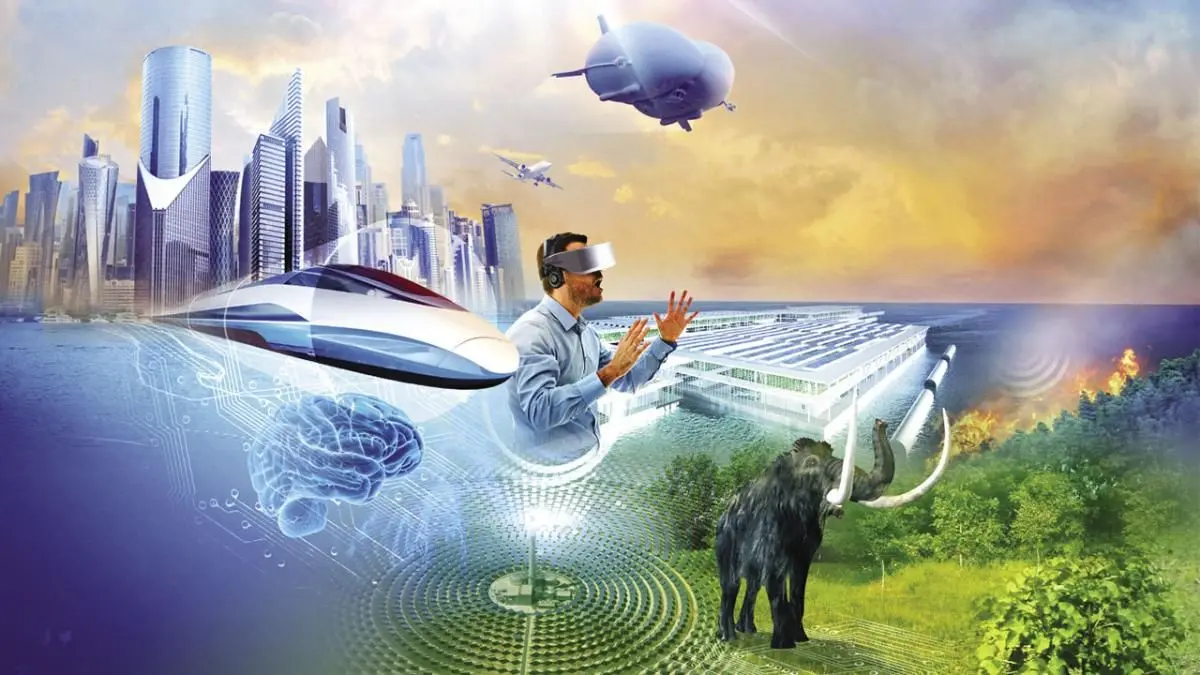
When we talk about future tech innovations, we’re not just imagining sci-fi movies or futuristic gadgets—we’re looking at real technologies that are already being developed and will transform our daily lives in ways we can barely imagine.
From AI-driven healthcare to sustainable energy solutions, the next decade promises breakthroughs that could change how we live, work, and even interact with the world. Let’s take a deep dive into the most exciting technologies on the horizon.
1. Artificial Intelligence and Machine Learning

Artificial intelligence (AI) is at the forefront of future tech innovations. AI systems can analyze massive amounts of data, recognize patterns, and even make decisions that were once exclusive to humans. Machine learning, a subset of AI, allows computers to improve their performance over time without explicit programming.
Some examples include:
- Healthcare: AI algorithms can detect early signs of diseases like cancer or heart conditions, improving patient outcomes.
- Smart Cities: AI can optimize traffic flow, reduce energy consumption, and even monitor pollution levels in real-time.
- Business Intelligence: AI-driven analytics help companies predict market trends, optimize operations, and deliver personalized services to customers.
The future of AI includes self-learning systems capable of solving complex problems, personal AI assistants that understand you intuitively, and even AI-powered creativity tools for art, music, and design.
2. Quantum Computing
Quantum computing is one of the most revolutionary future tech innovations. Unlike traditional computers that use bits (0s and 1s), quantum computers use qubits, which can exist in multiple states simultaneously. This allows quantum machines to perform calculations exponentially faster than classical computers.
Potential applications include:
- Drug Discovery: Modeling molecular interactions in seconds that would take conventional computers years.
- Cryptography: Creating ultra-secure communication methods that are virtually unhackable.
- Climate Research: Simulating complex environmental systems to predict climate changes more accurately.
Quantum computing could transform industries that rely on massive data processing, opening doors to solutions we haven’t yet imagined.
3. Renewable and Sustainable Energy
With climate change as one of humanity’s biggest challenges, sustainable energy is a critical area of future tech innovations. Technologies are being developed to generate, store, and use energy more efficiently.
Some advancements include:
- Next-Generation Solar Panels: More efficient, flexible, and cheaper solar cells that could power homes and cities.
- Wind and Tidal Energy: Innovations in turbine design are increasing energy capture from wind and ocean currents.
- Fusion Energy: Though still in experimental stages, fusion promises a clean and virtually limitless energy source.
- Smart Grids: These systems distribute energy intelligently, balancing supply and demand while integrating renewable sources.
The goal is not just to produce clean energy but also to make it affordable and accessible to everyone.
4. Biotechnology and Genetic Engineering
Biotechnology is pushing the boundaries of medicine, agriculture, and environmental solutions. With technologies like CRISPR, scientists can edit genes with precision, opening possibilities that were once science fiction.
Applications include:
- Healthcare: Personalized medicine tailored to an individual’s genetic profile can improve treatments and reduce side effects.
- Agriculture: Genetically modified crops can resist pests, droughts, and diseases, increasing food security.
- Environmental Solutions: Microbes can be engineered to clean pollutants or capture carbon from the atmosphere.
Future biotech innovations may even extend human lifespan and enhance our biological capabilities, making the impossible possible.
You may also like it:
Home Tech Solutions: Smart Home, Security & Automation
Software Product Reviews: Compare Tools, Features & Pricing
Step-By-Step Tech Guides For Beginners And Experts
Electronic Product Reviews: Compare Features & Performance
5. Space Exploration and Technology
The final frontier is getting closer than ever. Future tech innovations in space include not only better spacecraft but also the potential for sustainable living beyond Earth.
Key developments include:
- Reusable Rockets: Companies like SpaceX have dramatically reduced launch costs.
- Advanced Propulsion Systems: Faster and more efficient travel could make Mars missions feasible.
- Space Habitats: Concepts for living on the Moon or Mars include self-sustaining habitats with renewable energy and advanced life support.
- Space Mining: Extracting resources from asteroids could support both Earth and space economies.
The next decades could see humans living and working beyond our planet, opening new economic and scientific frontiers.
6. Internet of Things (IoT) and Smart Devices
The Internet of Things (IoT) is connecting everyday objects to the internet, enabling them to communicate and make decisions autonomously.
Examples of future tech innovations in IoT:
- Smart Homes: Devices like fridges, lights, and thermostats that learn your habits and adjust automatically.
- Wearables: Health monitors that track vitals in real-time and alert users or doctors to potential issues.
- Industrial IoT: Factories use sensors and automation to optimize production, reduce waste, and improve safety.
- Smart Cities: From traffic management to energy-efficient buildings, IoT can make urban living more sustainable.
As AI integrates with IoT, devices will become predictive and self-managing, enhancing convenience, safety, and efficiency.
7. Augmented Reality (AR) and Virtual Reality (VR)
AR and VR technologies are redefining the way we experience the world.
Applications include:
- Education: Virtual classrooms where students can explore 3D models of history, science, and anatomy.
- Entertainment: Immersive gaming experiences and interactive movies.
- Healthcare: VR simulations for surgery training or patient therapy.
- Remote Work: AR and VR can create virtual offices, making collaboration more interactive and engaging.
Future tech innovations will make AR and VR more realistic, affordable, and accessible, transforming industries across the board.
8. Autonomous Vehicles and Drones
Self-driving cars, drones, and robotic delivery systems are no longer futuristic concepts—they are actively being tested and implemented.
- Autonomous Vehicles: Reduce accidents, optimize traffic flow, and provide mobility for those unable to drive.
- Delivery Drones: Fast, contactless deliveries that save time and reduce carbon footprint.
- Flying Taxis: Urban air mobility could ease congestion and revolutionize transportation.
As these technologies improve, they will reshape logistics, transportation, and even urban planning.
Conclusion
The world of future tech innovations is thrilling, dynamic, and transformative. These technologies are not just about convenience—they have the potential to solve global problems, improve quality of life, and open opportunities we have yet to imagine. Staying informed about these advancements allows us to anticipate changes, adapt, and even participate in shaping the future ourselves.
From AI to space exploration, sustainable energy to biotech, the next decade will be defined by breakthroughs that challenge the limits of human creativity and ingenuity. The future isn’t just coming—it’s being built today.
FAQs About Future Tech Innovations
1. What are future tech innovations?
Future tech innovations are emerging technologies that have the potential to transform industries, improve lives, and solve global challenges. They include developments in AI, quantum computing, biotechnology, renewable energy, AR/VR, IoT, autonomous vehicles, and space exploration.
2. How will AI shape future innovations?
AI will drive automation, enhance decision-making, and create intelligent systems capable of learning and predicting outcomes. From personalized healthcare to smart cities, AI will play a central role in many future tech innovations.
3. What is quantum computing, and why is it important?
Quantum computing uses qubits instead of traditional bits, allowing for much faster processing of complex problems. It can revolutionize fields like drug discovery, cryptography, climate modeling, and financial simulations, solving tasks impossible for conventional computers.
4. How is renewable energy evolving as a future technology?
Renewable energy technologies, including solar, wind, tidal, and fusion energy, are becoming more efficient, affordable, and accessible. Innovations like smart grids and energy storage solutions are helping reduce reliance on fossil fuels and support sustainable living.
5. What role does biotechnology play in future tech innovations?
Biotechnology, including gene-editing tools like CRISPR, is revolutionizing medicine, agriculture, and environmental solutions. It enables personalized healthcare, disease prevention, higher crop yields, and even environmental restoration efforts.
