



Let’s be honest — running a business today is not easy. Customers want fast service, teams need smooth communication, data must be protected, and competition is everywhere.
That’s exactly why business technology solutions have become so important.
Whether you run a small shop, an online business, a service company, or a large organization, technology can help you work faster, reduce mistakes, improve customer experience, and grow your business.
In this guide, I’ll explain what business technology solutions are, the most common types, their benefits, and how to choose the right solutions for your business.
What Are Business Technology Solutions?

Business technology solutions are tools, systems, and software that help businesses manage operations, improve productivity, and support growth.
These solutions can help with:
- Communication and collaboration
- Customer service
- Sales and marketing
- Data management
- Security and backup
- Accounting and finance
- Inventory and supply chain
- Automation and reporting
In simple words: They make your business smarter, faster, and more organized.
Why Business Technology Solutions Matter Today
Technology is no longer a luxury. It’s a basic need.
Here’s why businesses rely on technology solutions:
1. Customers Expect Fast Service
People don’t want delays. They want quick responses, fast delivery, and smooth communication.
2. Businesses Need to Save Time
Manual work takes too long and increases mistakes. Technology makes things easier.
3. Competition Is Strong
Your competitors are using digital tools. If you don’t, you may fall behind.
4. Data and Security Are More Important Than Ever
Businesses store customer data, financial records, and company information. Protection is necessary.
Top Types of Business Technology Solutions
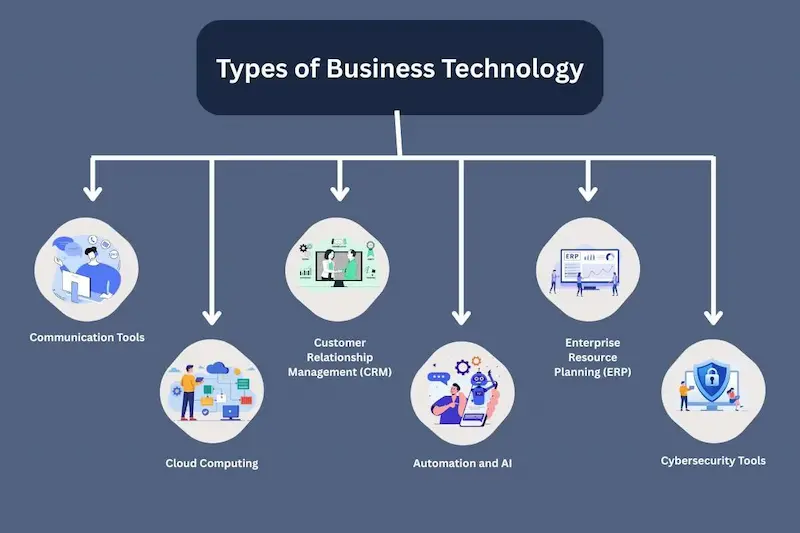
Below are the most popular and useful business technology solutions that companies use today.
1. Cloud Computing Solutions
Cloud solutions allow businesses to store files, data, and software online instead of using physical storage.
Examples
- Google Drive
- Dropbox
- Microsoft OneDrive
- AWS and Google Cloud
Benefits
- Access data from anywhere
- Easy file sharing
- Better security and backup
- Saves storage cost
2. Business Communication Tools
Communication is the backbone of every business. These tools help teams stay connected.
Examples
- Zoom
- Microsoft Teams
- Slack
- Google Meet
Benefits
- Faster teamwork
- Remote work support
- Easy video meetings
- Better collaboration
3. Cybersecurity Solutions
This is one of the most important business technology solutions today.
Cyber threats are increasing, and businesses of all sizes are at risk.
Cybersecurity Includes
- Antivirus and firewall
- Email protection
- Secure passwords and authentication
- Data encryption
- Network security
Benefits
- Protects customer and business data
- Prevents hacking and malware
- Builds customer trust
- Avoids financial loss
You may also like to read this:
Home Tech Solutions: Smart Home, Security & Automation
Applied Tech Tools: Meaning, Types & Real-Life Uses
Smart Technology Solutions: Home, Business & Modern Living
Tech Solutions for Work: Productivity, Collaboration & Efficiency
4. CRM (Customer Relationship Management) Software
CRM tools help businesses manage customers, leads, sales, and follow-ups.
Examples
- HubSpot
- Salesforce
- Zoho CRM
- Pipedrive
Benefits
- Tracks leads and customers
- Improves sales performance
- Better customer support
- Helps build long-term relationships
5. ERP (Enterprise Resource Planning) Systems
ERP systems manage business operations like finance, inventory, HR, and supply chain in one place.
Common ERP Systems
- SAP
- Oracle
- Microsoft Dynamics
Benefits
- All departments connected
- Better decision-making
- Less manual work
- Smooth business operations
6. Accounting and Financial Software
If you manage business money manually, it becomes stressful and risky.
Accounting tools help track income, expenses, taxes, and reports.
Examples
- QuickBooks
- Xero
- FreshBooks
- Wave
Benefits
- Better cash flow tracking
- Accurate reporting
- Saves time
- Helps during tax season
7. Digital Marketing Solutions
Marketing is now digital. Businesses need technology solutions to reach customers online.
Digital Marketing Tools Include
- SEO tools (Ahrefs, SEMrush)
- Email marketing tools (Mailchimp)
- Social media tools (Buffer, Hootsuite)
- Google Ads and Meta Ads platforms
Benefits
- Brings more customers
- Improves brand visibility
- Helps grow sales online
- Targets the right audience
8. E-Commerce Solutions
If you sell products online, e-commerce solutions are a must.
Examples
- Shopify
- WooCommerce
- Daraz seller center
- Amazon seller tools
Benefits
- Sell 24/7
- Reach more customers
- Easy order and payment management
- Supports business growth
9. Inventory and POS Systems
For retail stores, restaurants, and shops, POS and inventory solutions are extremely useful.
What They Do
- Track stock
- Manage sales
- Print receipts
- Record daily transactions
Benefits
- Reduces inventory loss
- Tracks best-selling items
- Makes billing faster
- Improves customer experience
10. Business Automation Tools
Automation reduces repetitive tasks like sending emails, updating spreadsheets, and assigning work.
Examples
- Zapier
- Make (Integromat)
- HubSpot automation
- Email autoresponders
Benefits
- Saves time
- Reduces errors
- Improves workflow
- Increases productivity
Benefits of Business Technology Solutions
1. Improves Productivity
Your team can do more work in less time.
2. Saves Business Costs
Less manual labor, fewer mistakes, and better resource management.
3. Better Customer Experience
Faster support, better communication, and smoother services.
4. Helps You Make Smarter Decisions
With reports and analytics, you can plan better.
5. Makes Your Business More Competitive
Technology gives you an edge over competitors.
How to Choose the Right Business Technology Solutions
1. Understand Your Business Needs
Ask yourself:
- What problem am I trying to solve?
- Where is my business slow?
- What tasks waste time?
2. Set a Budget
Some tools are free, some are expensive. Start small and upgrade later.
3. Choose Easy-to-Use Tools
If your team can’t use it, it won’t help.
4. Look for Scalability
Pick solutions that can grow with your business.
5. Check Support and Security
Always choose trusted tools with good customer support.
Business Technology Solutions for Small Businesses
If you’re running a small business, these are the best starting points:
- Google Workspace (email and drive)
- WhatsApp Business
- A simple CRM (HubSpot free)
- Basic accounting software
- Social media marketing tools
- Antivirus and backup solution
Start with these, and then upgrade as your business grows.
Future Trends in Business Technology Solutions
1. Artificial Intelligence (AI)
AI tools help businesses with:
- customer support chatbots
- content creation
- sales forecasting
- data analysis
2. Remote Work Technology
More businesses are using remote teams, so collaboration tools are growing.
3. Automation Everywhere
More tasks will become automated to save time and reduce costs.
4. Stronger Cybersecurity
As online threats grow, businesses will invest more in security solutions.
FAQs – Business Technology Solutions
1. What are business technology solutions?
Business technology solutions are tools and systems that help businesses improve operations, productivity, and customer service using technology.
2. Why do businesses need technology solutions?
Businesses need them to save time, reduce costs, improve customer experience, and stay competitive.
3. What are the most common business technology solutions?
Cloud storage, cybersecurity, CRM software, accounting tools, communication apps, and marketing tools are the most common.
4. Are business technology solutions expensive?
Not always. Many solutions offer free plans or low-cost packages, especially for small businesses.
5. Which technology solution should a small business start with?
Small businesses should start with cloud storage, basic cybersecurity, accounting software, and communication tools.
Final Words
Business success today depends heavily on smart technology. The good news is you don’t need to be a tech expert to use business technology solutions.
Start with simple tools that solve your biggest problems, and slowly upgrade as your business grows.
